BYD has delivered a much-needed improvement in its financial performance, with BYD Q2 profit rising nearly 30 percent as strong overseas demand helped offset weaker sales in its home market. The result is significant because it represents the company’s first quarterly profit increase in more than a year.
BYD reported second-quarter net profit of about 8.2 billion yuan, or approximately 1.22 billion dollars, representing a 29.8 percent increase from the same period a year earlier. At the same time, quarterly revenue declined 3.2 percent to about 194.6 billion yuan.
That combination tells a more interesting story than the headline number alone. BYD Q2 profit improved even though revenue declined, suggesting that the company’s changing sales mix and growing international business are becoming increasingly important to its financial performance.
BYD Q2 Profit Marks a Major Change in Direction
The latest BYD Q2 profit figure is important because the company had been dealing with several quarters of declining earnings. Before this rebound, BYD had recorded four consecutive quarterly profit declines. The previous quarter was particularly difficult, with profit falling 55.4 percent year over year. The second quarter therefore represents a meaningful reversal in momentum.
However, it would be misleading to describe the entire first half of 2026 as a period of strong growth. BYD’s first-half net profit fell about 20.5 percent to approximately 12.3 billion yuan, while first-half revenue declined 7.1 percent to roughly 344.8 billion yuan.
This is why the BYD Q2 profit increase needs to be viewed as a recovery signal rather than proof that every part of the business has returned to strong growth.
Overseas Sales Are Becoming the Key Growth Engine
The biggest factor behind the BYD Q2 profit improvement is the company’s growing international business. BYD exported about 792,000 vehicles during the first half of 2026, representing an increase of roughly 68 percent from a year earlier. Overseas sales reached about 471,000 vehicles in the second quarter alone, an increase of more than 82 percent year over year.
That is a remarkable change for a company that historically depended heavily on China. The growing export business gives BYD access to markets where electric vehicles and plug-in hybrids are still expanding. Europe, Southeast Asia and Latin America have become important destinations for Chinese electric vehicles, giving manufacturers such as BYD opportunities to build sales outside an increasingly competitive Chinese market.
The BYD Q2 profit result shows why international expansion matters financially, not just strategically.
Why China Has Become a More Difficult Market
China remains the foundation of BYD’s business, but the domestic automobile market has become exceptionally competitive.
Chinese automakers are competing aggressively on price, technology, battery performance, software, and equipment. Consumers have more choices than ever, while manufacturers are under pressure to offer better vehicles without increasing prices.
BYD has also faced increasing competition from companies such as Geely, Xiaomi and Nio. Reuters previously reported that BYD’s quarterly profit had suffered from weak domestic sales and intensifying competition.
This environment makes BYD’s Q2 profit even more interesting. The company did not need a major recovery in its domestic market to improve quarterly earnings. Instead, stronger international sales helped compensate for weakness at home. That could become one of the most important themes in BYD’s business over the next several years.
BYD Is Becoming More Global
The latest numbers suggest that BYD is no longer simply a Chinese automaker looking for occasional opportunities overseas. It is increasingly becoming a global automotive company.
BYD has expanded its presence across Europe, Southeast Asia, Latin America, and other international markets. It has also continued to introduce different brands and models to appeal to customers outside China.
The company’s international strategy is important because different markets have different preferences. A small electric vehicle can make sense in a crowded European city, while a larger SUV or plug-in hybrid may be more attractive in another market.
This flexibility gives BYD more opportunities to balance demand between regions. The BYD Q2 profit improvement demonstrates the potential benefit of that strategy. Strong overseas demand can reduce the company’s dependence on the Chinese market and create another source of revenue and profit.
Higher Overseas Margins Matter
Another important point is that international growth is not simply about selling more cars.
Profitability matters.
Recent reporting indicates that BYD’s overseas business has generated higher margins than its domestic operations. Reuters reported that the gross profit margin from the company’s overseas business reached about 22 percent, helping offset pressure in China.
This helps explain how BYD Q2 profit could rise while overall quarterly revenue declined. If a company sells more vehicles in markets where it can earn stronger margins, the additional sales can have a greater effect on earnings than simply increasing low-margin domestic volume. For investors and industry observers, this is one of the most important details behind the BYD Q2 profit headline.
Revenue Still Shows There Is Work to Do
Despite the stronger BYD Q2 profit figure, revenue declined during the quarter. Quarterly revenue came in at about 194.6 billion yuan, down 3.2 percent from a year earlier. This was the fourth consecutive quarter in which revenue declined year over year.
That is a clear reminder that BYD is still operating in a challenging environment. A healthy long-term recovery should ideally involve both increasing revenue and increasing profit. At the moment, BYD is showing that it can improve profitability even when sales revenue remains under pressure. That is encouraging, but it is not the same as returning to rapid overall growth.
The Sales Mix Is Changing
One of the most interesting developments is the changing composition of BYD’s sales. The company sold about 1.81 million new energy vehicles during the first half of 2026, down approximately 15.7 percent year over year. However, the decline became much smaller in the second quarter, when sales fell about 3.2 percent compared with a 30 percent decline in the first quarter.
At the same time, exports accelerated dramatically. This means the company is experiencing two very different trends at once. Domestic sales remain under pressure, while international demand is growing rapidly. The BYD Q2 profit number reflects this transition.
BYD Q2 Profit and the Importance of Premium Models
Another factor worth watching is BYD’s move beyond inexpensive electric vehicles. The company has increasingly developed higher-priced products and premium brands, including Denza and other upscale offerings. These vehicles can potentially improve the average revenue and profitability generated from each customer.
That matters because the future of the electric vehicle industry will not be decided only by who sells the most cars. Manufacturers also need to make money from those vehicles. BYD Q2 profit growth suggests that product mix is becoming an increasingly important part of the company’s financial story.
What This Means for BYD Versus Tesla
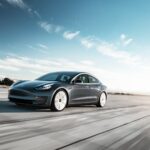
The latest results also add another layer to the competition between BYD and Tesla. BYD has built its strength around a broad portfolio that includes battery electric vehicles and plug-in hybrid vehicles. It also has extensive manufacturing capabilities and a rapidly expanding international distribution network.
Tesla, meanwhile, has traditionally focused more heavily on battery electric vehicles and has been investing heavily in software, autonomy, robotics and related technologies.
The BYD Q2 profit recovery does not mean BYD has permanently gained an advantage over Tesla in every area. It does show, however, that BYD is finding new growth opportunities at a time when the Chinese electric vehicle market is becoming increasingly difficult. BYD also remained ahead of Tesla in global electric vehicle sales during the first half of 2026, according to recent financial reporting.
Tariffs Could Become the Next Challenge
There is another issue that investors should not ignore. Expanding exports brings BYD into more markets, but international growth also exposes the company to tariffs, trade restrictions, and local regulations.
Europe and other regions are increasingly focused on the rapid growth of Chinese electric vehicle imports. Governments can change tariff structures or introduce policies designed to protect domestic manufacturers.
That means international expansion is not automatically risk-free. The same export strategy that helped support BYD Q2 profit could face additional costs if tariffs rise or if BYD needs to invest more heavily in local production facilities.
Why BYD Q2 Profit Does Not Tell the Whole Story
The headline 30 percent increase is impressive, but the broader financial picture is more complicated. First-half profit remained down about 20.5 percent. Revenue also declined. Vehicle sales were lower overall, while domestic competition remained intense.
Therefore, the best way to understand BYD Q2 profit is to see it as evidence of improving business quality rather than simply higher sales.
BYD is proving that it can generate stronger earnings from a changing geographical and product mix.
Whether that improvement can continue will depend heavily on international demand, pricing, production costs, tariffs, and the company’s ability to stabilize sales in China.
What BYD Needs to Do Next
The next challenge for BYD is maintaining international growth without allowing costs to rise too quickly. The company needs to continue building brand recognition outside China while adapting vehicles to local customer preferences. It also needs reliable service networks, charging partnerships, and competitive financing options in major markets.
At the same time, BYD cannot afford to abandon its domestic market. China remains one of the world’s largest electric vehicle markets, and BYD has an enormous customer base there. Stabilizing domestic sales would make the company’s overall growth profile much stronger. If BYD can combine a recovery in China with continued export growth, future quarterly earnings could become much more impressive.
What Consumers Can Learn From These Results
For car buyers, BYD’s financial performance is more than an investor story. A financially strong automaker can generally invest more aggressively in new models, battery technology, software, and manufacturing capacity.
BYD’s international expansion could also mean more model choices for consumers in markets where its vehicles are becoming available.
However, buyers should not choose a vehicle simply because its manufacturer reports strong profits. Reliability, warranty support, spare parts availability, charging infrastructure, and local service quality remain more important considerations when purchasing an electric vehicle.
Financial success can support a good product, but it does not replace careful vehicle research.
The Bigger Picture for the Global EV Market
The BYD Q2 profit story reflects a much larger shift in the automotive industry. Chinese EV manufacturers are increasingly looking outside their domestic market for growth. At the same time, global electric vehicle demand continues to expand unevenly across regions.
Recent data showed global EV sales rebounded strongly in the second quarter of 2026, with quarterly sales rising 35 percent from the first quarter and records being set in dozens of countries.
That creates an important opportunity for manufacturers that can produce competitive electric vehicles at scale. BYD is clearly trying to take advantage of that opportunity.
My Opinion on BYD Q2 Profit
The latest BYD Q2 profit result is one of the company’s most important financial developments in more than a year. Net profit rose 29.8 percent to about 8.2 billion yuan, reversing a long period of quarterly declines. The improvement came despite a 3.2 percent decline in quarterly revenue, with rapidly growing exports playing a major role in supporting profitability.
The bigger lesson is that BYD is changing. Its future growth is increasingly connected to international markets rather than relying almost entirely on China. That strategy carries risks, particularly tariffs, competition, and higher expansion costs, but the latest BYD Q2 profit figures suggest the strategy is beginning to produce meaningful financial results.
For now, the most accurate conclusion is not that BYD has completely recovered. Instead, BYD has shown that it has another powerful growth engine.
If overseas sales continue expanding while the company manages to stabilize its Chinese business, the BYD Q2 profit rebound could prove to be the beginning of a much more important turnaround.
For automotive readers following the global EV market, BYD’s next few quarters will be worth watching closely. WheelsWind will continue following the company’s international expansion, vehicle launches, and financial performance as the competition in the electric vehicle market develops.