Article Highlights
- Electric Vehicle Technology has transformed electric cars from early short-range vehicles into practical modern transportation.
- Modern EV batteries, electric motors, regenerative braking, and thermal management are changing how cars perform and operate.
- Charging technology is becoming faster and more convenient, although infrastructure remains important for long-distance travel.
- Next-generation batteries, including solid-state and sodium-ion technology, could further improve the electric car experience.
- The future of Electric Vehicle Technology will depend on better efficiency, battery durability, charging infrastructure, software, and affordability.
Electric cars are no longer experimental machines designed mainly for short urban trips. They have become serious alternatives to gasoline and diesel vehicles, with improvements in battery capacity, charging speed, electric motors, software, safety systems, and vehicle efficiency changing what drivers expect from a modern automobile.
At the center of this transformation is Electric Vehicle Technology. It has developed from relatively simple battery-powered vehicles into a sophisticated combination of energy storage, power electronics, software, connected systems, and electric propulsion.
The growth has been substantial. According to the International Energy Agency, global electric car sales exceeded 17 million in 2024, representing more than 20 percent of worldwide new car sales. The IEA also expected global electric car sales to exceed 20 million in 2025.
Understanding Electric Vehicle Technology is therefore useful whether you are considering buying an electric car, following automotive innovation, or simply trying to understand where the automobile industry is heading.
What Is Electric Vehicle Technology
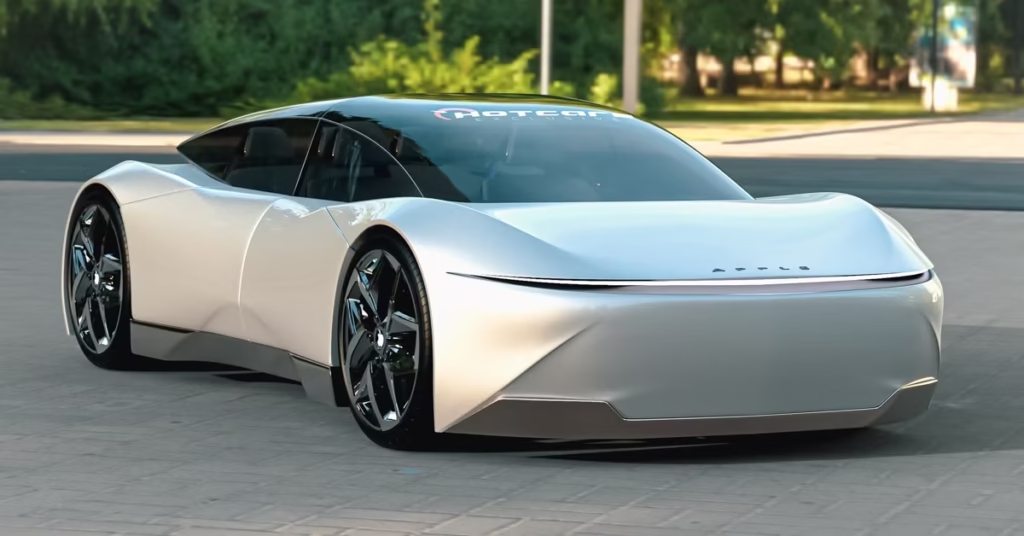
Electric Vehicle Technology refers to the collection of technologies that allow a vehicle to store electrical energy, convert that energy into motion, manage power efficiently, and recharge the battery.
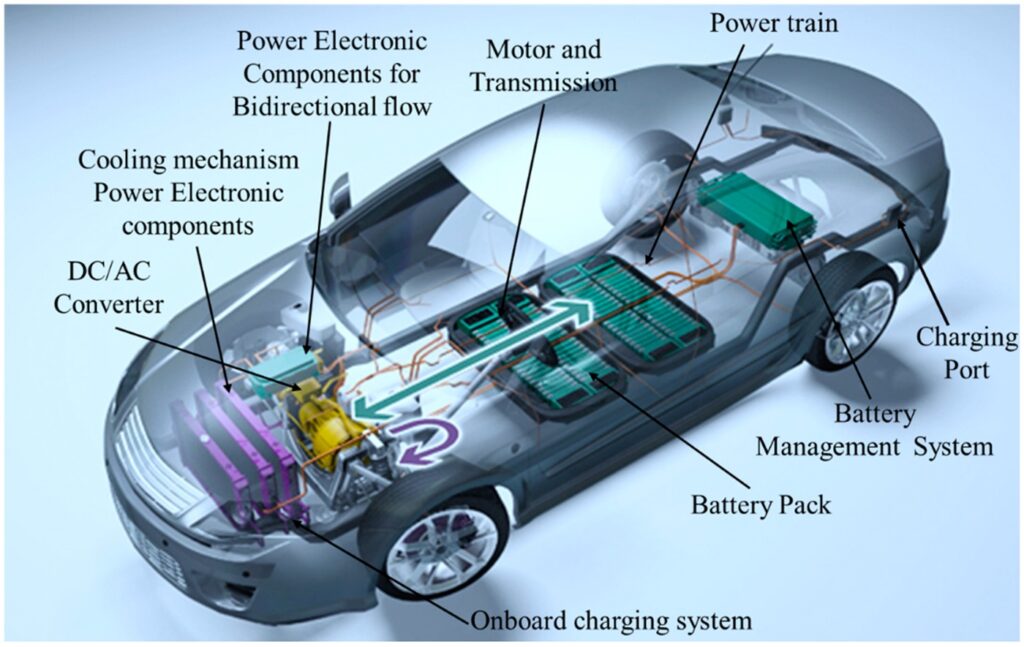
The most important components include the battery pack, electric motor, inverter, charging system, thermal management system, regenerative braking system, electronic control units, and increasingly sophisticated software.
Unlike a conventional car, which relies on an internal combustion engine to convert fuel into mechanical energy, a battery electric vehicle stores electricity chemically inside its battery and uses an electric motor to move. The U.S. Department of Energy describes battery electric vehicles as vehicles powered entirely by electricity stored in a battery pack. This difference sounds simple, but it changes almost every part of the vehicle.
How Electric Cars Have Evolved
The history of Electric Vehicle Technology is much older than many people realize. Electric vehicles were being developed during the nineteenth century, long before today’s modern EV market existed.
Around 1832, Robert Anderson developed a crude electric vehicle, while later inventors in Europe and the United States developed more practical electric cars. William Morrison’s electric vehicle in the United States around 1890 helped generate further interest in electric transportation.
By the early twentieth century, electric cars had become genuine competitors to gasoline- and steam-powered vehicles. They were quiet, relatively easy to operate, and particularly attractive for urban driving. Around the turn of the century, electric vehicles accounted for a significant portion of vehicles on American roads.
However, gasoline eventually won the early automotive competition because fuel was easier to carry, driving ranges were longer, roads improved, and mass production made gasoline cars increasingly affordable. By 1905, gasoline vehicles had become more popular than electric and steam cars.
The modern revival of Electric Vehicle Technology came much later, particularly as battery technology improved and concerns about fuel consumption and emissions increased.
The Battery Is the Heart of an Electric Car
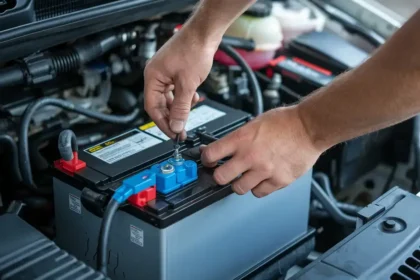
When people discuss Electric Vehicle Technology, the battery usually receives the most attention, and for good reason. The battery determines much of an electric car’s range, performance, weight, charging capability, and cost. Modern EVs primarily use lithium-ion battery technology, although manufacturers and researchers are also exploring alternatives such as sodium-ion and solid-state batteries.
A battery pack contains many individual cells connected into modules and larger assemblies. These cells store energy through electrochemical processes and release that energy when the vehicle needs electricity.
Modern battery management systems constantly monitor factors such as temperature, voltage, current, and state of charge. This electronic supervision is essential because batteries must operate within carefully controlled conditions.
Why Battery Chemistry Matters
Not every electric car uses the same battery chemistry. Different chemistries can prioritize energy density, durability, cost, safety, charging performance, or material availability. This is why two electric cars with similar battery capacities can behave differently on the road.
Battery development is also moving beyond conventional lithium-ion technology. Researchers are investigating solid-state, sodium-ion, lithium metal, lithium-sulfur, and other approaches that could potentially improve range, charging, safety, or cost.
However, many of these technologies are still developing. Consumers should therefore distinguish between laboratory potential and technology that is already widely available in production vehicles.
Electric Motors Changed the Driving Experience
The electric motor is another major achievement of Electric Vehicle Technology. An electric motor can produce strong torque almost immediately, which is why many EVs feel exceptionally responsive when accelerating from a stop. There is no need for the engine to build revs in the same way as a conventional gasoline engine.
Many electric vehicles also use a relatively simple drivetrain compared with traditional combustion vehicles. There is no conventional multi-speed transmission, exhaust system, or engine requiring oil changes in the traditional sense.
This simplicity does not mean an EV has no mechanical components. Tires, suspension, steering, brakes, bearings, cooling systems, and other components still require inspection and maintenance. The difference is that propulsion itself becomes much more electronically controlled.
Regenerative Braking Makes Every Drive Different
Regenerative braking is one of the most noticeable features of Electric Vehicle Technology. When an electric vehicle slows down, its motor can operate in reverse as a generator. Instead of allowing all of the vehicle’s kinetic energy to disappear as heat through conventional friction brakes, part of that energy can be converted back into electrical energy and stored in the battery.
This is particularly useful in city driving, where frequent acceleration and deceleration create more opportunities for energy recovery. Some EVs allow drivers to adjust regenerative braking. Stronger regeneration can produce a one-pedal driving experience where lifting off the accelerator causes significant deceleration. It takes a little practice, but many drivers quickly become comfortable with it.
Charging Has Become a Major Part of Electric Vehicle Technology
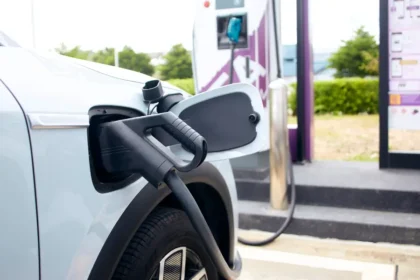
Charging is arguably the biggest change in daily driving habits for people moving from gasoline vehicles to EVs. Instead of visiting a fuel station every time the tank becomes empty, many EV owners charge their cars at home while parked. A home charger can make an electric vehicle feel more convenient because the vehicle begins the day with energy already available.
Charging speeds depend on the vehicle, charger, battery condition, temperature, and electrical supply. Level 1 charging uses a standard household outlet and is relatively slow. Level 2 charging provides substantially more power and is better suited to regular home charging.
DC fast charging can provide much higher charging power for longer journeys. The Department of Energy identifies these as common charging approaches for plug-in vehicles.
The important lesson is that charging speed should not be judged by the charger alone. The vehicle must also be capable of accepting the available power.
Why Charging Speed Is Not Always the Same
A common misunderstanding about Electric Vehicle Technology is that a fast charger will always charge an EV at its maximum advertised speed.
In reality, charging power can change during a charging session. Battery temperature, state of charge, charger capacity, and vehicle software can all affect charging performance.
An EV may accept high power when the battery has a relatively low state of charge and then gradually reduce power as the battery approaches a higher charge level.
This is why manufacturers often advertise charging time within a particular percentage range rather than promising a constant charging speed. For everyday use, this distinction matters more than a headline charging figure.
Software Has Become a Core Automotive Technology
Modern Electric Vehicle Technology is not limited to hardware. Software now controls battery management, charging behavior, energy consumption, regenerative braking, thermal systems, driving modes, safety features, navigation, and many aspects of vehicle performance.
Some manufacturers can also improve vehicle functions through software updates. This creates a vehicle ownership experience that increasingly resembles the technology industry.
The advantage is flexibility. The disadvantage is greater dependence on electronic systems and software quality. A modern EV can have excellent hardware but still deliver a frustrating experience if its software is confusing, unreliable, or poorly integrated.
Thermal Management Is More Important Than It Looks
Temperature has a major influence on battery performance. Very cold conditions can reduce available range and charging performance, while high temperatures can increase cooling requirements. The U.S. Department of Energy notes that extreme temperatures can reduce EV range because additional energy may be needed to heat or cool the vehicle cabin.
This makes battery thermal management an important part of Electric Vehicle Technology. Modern EVs use sophisticated systems to manage battery temperature. Depending on the vehicle, these systems may heat or cool the battery before driving or fast charging. For drivers living in very hot climates, this technology can be particularly important.
The Real World Range Question
Electric car range is one of the most frequently discussed subjects, but the official number is only part of the story. Driving speed, temperature, road conditions, tire pressure, vehicle weight, acceleration, heating, air conditioning, and terrain can all influence energy consumption. Highway driving can consume more energy than city driving because aerodynamic drag increases significantly at higher speeds.
This means a vehicle advertised with a particular range will not necessarily achieve that exact number in every situation. A better approach is to consider your own driving pattern.
If most journeys are short commutes and the vehicle can be charged at home, a modest range may be perfectly adequate. Someone who regularly travels long distances through areas with limited charging infrastructure should prioritize both range and charging availability.
The Advantages of Modern Electric Vehicle Technology
One of the strongest advantages of Electric Vehicle Technology is efficiency. Electric motors can convert electrical energy into motion efficiently, and regenerative braking can recover part of the energy normally lost during deceleration.
EVs also produce no direct tailpipe emissions while driving. This does not mean that electric vehicles have zero environmental impact because battery production, electricity generation, manufacturing, and recycling all have environmental consequences. The benefit is that there are no direct exhaust emissions from the vehicle itself.
Another advantage is the driving experience. Instant torque, smooth acceleration, quiet operation, and strong low-speed response make EVs feel different from traditional cars.
Maintenance can also be simpler in some areas because there is no conventional engine oil system and fewer traditional engine components.
The Disadvantages Drivers Should Understand
Electric Vehicle Technology also has limitations. The biggest concern for many buyers remains charging convenience. People who cannot charge at home may depend heavily on public charging networks.
Purchase prices can also remain high in some markets, although the situation varies significantly by country and vehicle segment. The Department of Energy notes that battery electric vehicles have historically been more expensive than comparable conventional or hybrid vehicles, although operating savings can offset some of the difference.
Long-distance travel requires more planning than it does in a conventional gasoline vehicle, particularly where charging infrastructure is limited.
Battery replacement costs can also appear intimidating, although a complete battery replacement should not be confused with normal battery degradation. Modern battery packs are designed to last for many years, but their performance gradually changes with age, use, temperature, and charging conditions.
Electric Vehicle Technology and Battery Longevity
Battery degradation is a natural part of rechargeable battery operation. Charging and discharging involve chemical processes that are not perfectly reversible. Over time, these processes can change battery materials and reduce performance.
Drivers can still take sensible steps to reduce unnecessary battery stress. Avoiding excessive heat exposure when possible, following the manufacturer’s charging recommendations, and using fast charging appropriately can help maintain a healthy battery system.
It is also important to remember that battery health is not measured simply by the number displayed on the dashboard. Modern battery management systems are designed to monitor and manage battery operation continuously.
The Rise of Next Generation Batteries
New battery designs could heavily influence the next stage of Electric Vehicle Technology. Solid-state batteries are among the most discussed technologies. Instead of relying on a conventional liquid electrolyte, solid-state batteries use a solid electrolyte. Researchers believe this approach could offer potential advantages in safety, performance, and energy storage, although large-scale commercial adoption remains a developing area.
Sodium ion batteries are another interesting development. Sodium is more widely available than lithium, and sodium-based systems could become useful for certain vehicles where cost and material availability are more important than maximum energy density.
The future battery market is therefore unlikely to depend on one universal chemistry. Different vehicles may use different battery technologies depending on their price, size, performance requirements, and intended use.
Electric Cars Are Becoming More Diverse
The early modern EV market was dominated by a relatively small number of vehicle types. Today, buyers can find electric hatchbacks, sedans, crossovers, SUVs, pickup trucks, performance cars, and premium vehicles.
Electric propulsion is even moving into segments traditionally associated with high performance and Luxury Vehicles. This diversity is important because it means electrification is no longer limited to one type of consumer.
A small city car and a high-performance electric SUV may both use Electric Vehicle Technology, but their engineering priorities can be completely different.
Electric Vehicle Technology and Performance Cars
Electric power has also changed the meaning of performance. Traditional performance cars often depend on high engine speeds, exhaust sound, mechanical gear changes, and carefully managed power delivery.
Electric cars can deliver enormous torque immediately and can use sophisticated electronic controls to manage traction. High-performance EVs can also use multiple motors to control individual axles and, in some cases, individual wheels. This creates new possibilities for handling and acceleration.
The result is not simply a faster version of a gasoline car. It is a different interpretation of performance.
Electric Vehicle Technology and Vehicle Efficiency
Efficiency is becoming one of the most important measurements for EV manufacturers. A larger battery can increase range, but it also adds weight. Simply installing a huge battery is therefore not always the smartest engineering solution.
Manufacturers are increasingly looking at aerodynamic design, lightweight materials, efficient motors, low rolling resistance tires, advanced power electronics, and improved thermal systems.
A more efficient vehicle can achieve useful range without carrying an unnecessarily large battery. That is one reason the future of Electric Vehicle Technology will involve much more than battery capacity alone.
What Electric Cars Mean for Drivers
The biggest change may not be mechanical at all. Electric cars encourage drivers to think about energy differently. With a gasoline vehicle, refueling is usually an occasional activity. With an EV, charging can become part of the normal parking routine.
For a driver with home charging, this can be extremely convenient. For someone without access to private charging, it can be a major inconvenience. The right EV therefore depends heavily on lifestyle rather than specifications alone.
Practical Tips for Choosing an Electric Car
Before buying an EV, consider how many kilometers you normally drive each day and where you can charge the vehicle. Check the usable battery capacity rather than focusing only on the headline battery size. Research real-world range from independent tests when possible and pay attention to performance in hot and cold weather.
Charging capability is equally important. A car with a large battery but slow charging may be less convenient on road trips than a slightly smaller battery paired with efficient fast charging. Also investigate the availability of charging stations along your regular routes. A technically impressive EV is not necessarily the best EV for your circumstances.
What the Future Holds
The evolution of Electric Vehicle Technology is unlikely to stop with better batteries. Future electric cars will increasingly combine advanced energy storage with artificial intelligence, connected services, improved driver assistance, smarter charging, bidirectional energy systems, and more efficient electric motors.
Vehicle-to-home and vehicle-to-grid technology could eventually allow compatible EVs to supply electricity back to buildings or the wider electricity system. The exact usefulness of these systems will depend on local regulations, electricity networks, compatible vehicles, and charging equipment.
Battery recycling will also become increasingly important as the global EV fleet grows. Researchers and manufacturers are already working on ways to recover valuable materials and improve battery sustainability.
Is Electric Vehicle Technology Ready for Everyone
For many drivers, the answer is yes.
For others, not yet.
Someone with home charging, predictable daily driving, and access to reliable public chargers may find an EV exceptionally convenient. A driver who regularly travels very long distances through regions with limited charging infrastructure may still prefer a hybrid or conventional vehicle.
That does not make one technology universally better. The most useful way to view Electric Vehicle Technology is as another major evolution in automotive engineering rather than a simple replacement that works identically for every driver.
Final Thoughts on the Evolution of Electric Cars
The story of Electric Vehicle Technology is not a story that began with modern electric cars. It reaches back to the nineteenth century, when inventors were already experimenting with battery-powered transportation.
What has changed is the technology surrounding the basic idea. Better batteries, powerful electric motors, regenerative braking, sophisticated power electronics, thermal management, high-speed charging, and advanced software have transformed electric cars from short-range curiosities into mainstream transportation.
Global sales demonstrate how quickly that transformation is progressing. Electric car sales exceeded 17 million worldwide in 2024, and the IEA projected more than 20 million sales for 2025.
The next chapter will be shaped by affordability, charging infrastructure, battery durability, new battery chemistries, recycling, and improvements in efficiency.
For drivers, the most important lesson is simple. Do not judge an electric car by its battery size or acceleration figure alone. Look at the complete system and consider how Electric Vehicle Technology fits your daily life.
That is where the real evolution of the electric car becomes meaningful.