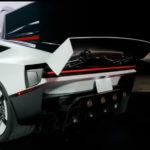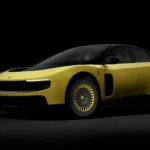
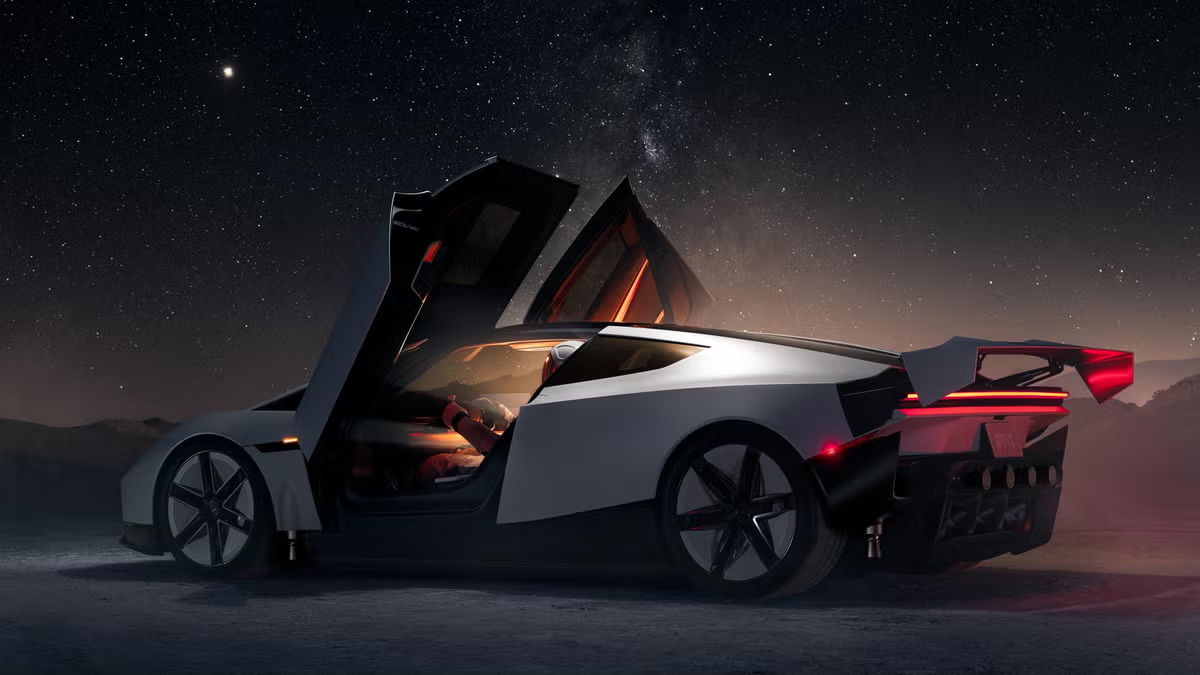
The Tesla Roadster has attracted attention for its ambitious performance targets and proposed SpaceX package, which could introduce rocket-inspired technology into an electric sports car. However, while the concept promises extraordinary acceleration and advanced engineering, it also raises important questions about vehicle safety, road legality, regulatory approval, and the practical challenges of bringing such technology to public roads.
For buyers interested in the next generation of electric performance cars, the Tesla Roadster represents more than a debate about speed. It highlights the difference between developing an innovative vehicle and proving that the vehicle can operate safely under existing automotive regulations.
The central question is whether the proposed Tesla Roadster SpaceX package can deliver its intended performance while meeting the requirements that apply to production cars. Until the relevant technical details and approvals are established, several questions remain unresolved.
What Is the Tesla Roadster SpaceX Package
The Tesla Roadster is an electric sports car project from Tesla that has been promoted as a high-performance vehicle with ambitious acceleration and range targets. The proposed SpaceX package adds another dimension by introducing rocket-inspired technology intended to improve acceleration and vehicle performance.
The concept has been associated with cold gas thrusters that would use compressed gas to produce brief bursts of thrust. Rather than relying entirely on the force generated by the electric motors and tires, such a system could potentially provide additional force under certain operating conditions.
However, the Tesla Roadster SpaceX package should not be confused with a conventional production option whose specifications and regulatory status are already established. Its final engineering details, production configuration, and approval for public road use must be distinguished from promotional claims and proposed capabilities.
That distinction matters because a technology can work in a controlled demonstration without automatically qualifying for use in a road-going vehicle. Automotive regulations consider not only performance but also occupant protection, system reliability, pedestrian safety, and the potential risks to other road users.
Why the Tesla Roadster Raises Regulatory Questions
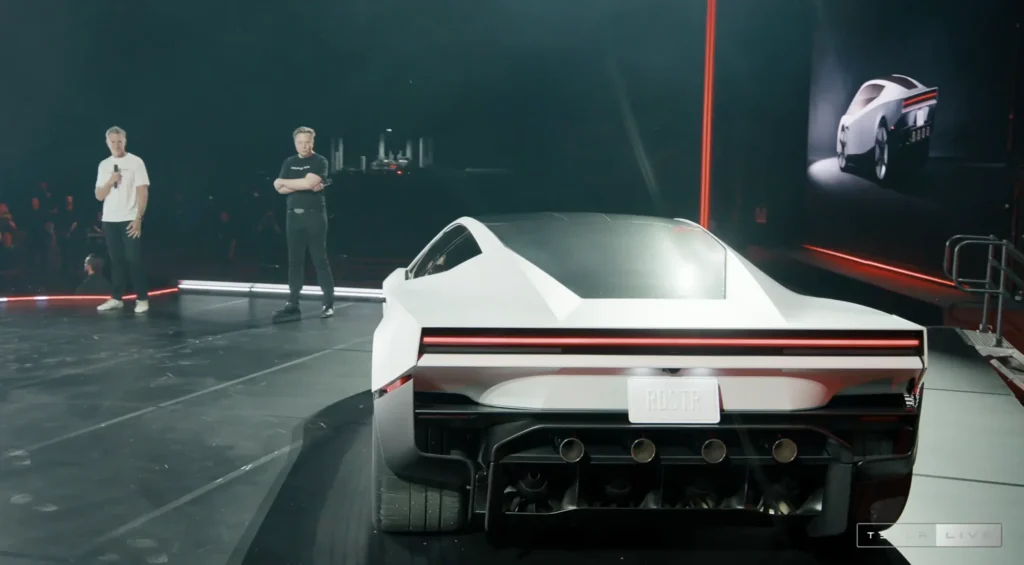
The recent unveiling of the redesigned Tesla Roadster has brought the regulatory debate into sharper focus. Tesla’s official website describes three configurations called Performance, Thrust, and Rocket. The Rocket version is presented as an invitation-only model with cold gas thrusters designed to support upward movement and other aerial maneuvers. Tesla explicitly states that this version is not approved for public road use.
This distinction is crucial. A vehicle designed to travel on public roads must meet the applicable motor vehicle requirements in the markets where it is sold. If a configuration also operates in the air, additional legal questions may arise concerning aviation safety, airspace, operator qualifications, and liability.
The Tesla Roadster therefore faces a challenge that goes beyond conventional electric vehicle development. Its engineers must establish which features can be offered in a road-legal configuration and which, if any, would be restricted to controlled demonstrations or specialized environments.
The unanswered questions should not automatically be interpreted as evidence of a violation. Instead, they indicate areas where further technical documentation, regulatory decisions, and public clarification are needed.
Road Legality and Aviation Rules
One of the most important questions concerns the legal classification of the rocket-equipped Tesla Roadster. A car that remains on the ground and uses additional technology to improve acceleration is not necessarily subject to the same requirements as a vehicle that enters the air.
If the Rocket configuration is intended to perform airborne maneuvers, regulators would need to determine which existing rules apply and whether additional approvals are necessary. The answer may depend on the vehicle’s design, intended operating environment, and the jurisdiction involved.
In the United States, the distinction between motor vehicles and aircraft can affect which federal agencies have authority over different aspects of operation. State and local rules may also govern road use, while aviation regulations can become relevant when a vehicle is operated as an aircraft.
The Tesla Roadster cannot simply be assumed to qualify as both a road car and an aircraft because it combines automotive and aerospace technology. Its classification would depend on the actual design and intended use, alongside the applicable legal requirements.
For potential owners, this creates a practical concern. A vehicle might be available for purchase without every advertised capability being legal to use on public roads or in unrestricted airspace. Tesla’s published restriction on the Rocket version makes it particularly important to distinguish the availability of a product from permission to operate it.
Cold Gas Thrusters Create New Safety Challenges
The proposed cold gas thrusters are among the most unusual elements of the Tesla Roadster SpaceX package. Unlike conventional rocket engines that burn propellant, cold gas thrusters generate thrust by releasing stored compressed gas through nozzles.
This approach avoids combustion in the thruster itself, but it does not eliminate every safety concern. A system storing large quantities of compressed gas must be engineered to withstand pressure, vibration, temperature changes, impacts, and repeated operation.
The placement and direction of the thrusters also matter. A burst of thrust that is useful in a controlled test could create unexpected movement if activated in traffic, near pedestrians, or in a confined space. Engineers would need to establish how the system responds to faults, unintended activation, sensor failures, and emergency shutdown commands.
The Tesla Roadster would also need safeguards that prevent its unusual propulsion system from interfering with normal driving. Drivers must be able to predict how a vehicle will respond to steering, braking, and acceleration under everyday conditions.
These concerns do not mean that cold gas propulsion is inherently unsafe. Aerospace engineers have used such systems for specialized applications. The challenge is demonstrating that the technology can operate reliably within the much more varied conditions encountered by a road vehicle.
Vehicle Certification and Crash Safety
Another major issue is whether the Tesla Roadster can meet applicable vehicle safety standards in its final production configuration.
Manufacturers must consider structural integrity, occupant protection, braking performance, lighting, restraints, and other requirements relevant to the markets in which their vehicles are sold.
Adding pressure vessels, thrusters, active aerodynamic components, and other specialized equipment could introduce additional engineering challenges.
For example, pressure vessels must remain secure during a collision. Their mounting points, protective structures, and failure behavior need careful evaluation. The vehicle must also preserve adequate protection for occupants if an accident damages the propulsion hardware.
The proposed suction system creates another area that deserves scrutiny. Tesla describes a system using fans and underbody sealing to generate substantial downforce. While increased downforce can improve tire grip in suitable conditions, engineers must also establish how the system behaves when components fail, the road surface changes, or debris interferes with airflow.
The Tesla Roadster must be evaluated as a complete vehicle rather than as a collection of impressive individual technologies. Performance improvements are valuable only if the overall design meets the required safety standards.
Intellectual Property and SpaceX Technology
The regulatory discussion also extends beyond physical safety. The relationship between Tesla and SpaceX raises questions about technology ownership, licensing, and the commercial terms governing their collaboration.
The companies are associated with Elon Musk, but they are separate corporate entities. That distinction matters when technology, engineering resources, intellectual property, and commercial opportunities are shared between businesses.
Reporting on the Tesla Roadster SpaceX package has raised questions about who owns the relevant technology, how any licensing arrangements work, and whether export control rules could apply to particular components or technical information. These are legitimate areas for examination, but unanswered questions alone do not establish that either company has breached a law.
A clear public explanation of the technology’s ownership and commercial arrangements would help investors and prospective buyers understand how the project is structured. It would also help distinguish ordinary collaboration between related businesses from arrangements that might require additional regulatory review.
For a high-profile project involving automotive and aerospace engineering, transparency can be as important as technical ambition.
Corporate Governance and Shareholder Questions
The Tesla Roadster SpaceX package also raises questions about corporate governance because the project involves two companies with different business responsibilities.
Investors may reasonably want to understand how development costs are allocated, which company owns the intellectual property, and how the commercial benefits of the technology are distributed. These questions become especially relevant when a project uses resources or expertise associated with more than one company.
Related party transactions are not automatically improper. However, depending on the circumstances, corporate governance rules and disclosure obligations may require appropriate documentation, review, or disclosure to shareholders.
The key issue is whether the arrangement serves the relevant company’s interests and complies with applicable legal requirements. Publicly available information does not, by itself, establish that the Tesla Roadster project has violated corporate governance rules.
For investors, the most useful evidence would include clear information about material costs, contractual arrangements, development responsibilities, and any financial commitments that could affect the companies involved.
Export Controls and Technology Transfer
Another unresolved area concerns the possible application of export control rules to aerospace related technology.
Export controls can restrict the transfer of certain technical information, equipment, or software across international borders. Whether a specific restriction applies depends on the technology involved, its classification, the destination, and the parties participating in the transfer.
The Tesla Roadster SpaceX package combines automotive engineering with technology associated with aerospace development. That combination makes it reasonable to ask whether any components or technical information fall under relevant controls. It does not establish that the entire package is subject to aerospace export restrictions.
The distinction is important because automotive components and aerospace systems can be governed by different regulatory frameworks. The fact that a component uses rocket-inspired engineering does not automatically make it a controlled aerospace product.
Tesla and SpaceX would need to comply with any applicable requirements governing the development, transfer, and distribution of restricted technology. Clear documentation would help establish which rules apply and whether additional approvals are necessary.
Insurance and Liability Could Become Major Obstacles
Even if the Tesla Roadster receives the necessary approvals for a particular configuration, insurance could remain a practical challenge.
Traditional vehicle insurance is designed around familiar risks, including collisions, theft, property damage, and injuries. A vehicle with powerful thrusters and unconventional aerodynamic systems introduces additional questions about how an accident might occur and who would be responsible.
Insurers would need reliable technical information about the system, its failure modes, maintenance requirements, and intended operating conditions. They would also need to determine whether conventional policies adequately cover the risks or whether specialized coverage is required.
Liability could become more complicated if an accident involved an unintended thruster activation, a software malfunction, or damage caused by a vehicle operating outside its approved conditions.
For buyers, the important question is not simply whether the Tesla Roadster can perform a particular maneuver. It is whether the vehicle can be insured affordably, maintained properly, and operated legally without exposing the owner to unexpected financial or legal risks.
Until those details become clearer, prospective buyers should avoid assuming that every advertised feature will be covered by a standard insurance policy.
Production Timeline and Consumer Expectations
The Tesla Roadster has faced a lengthy development process, and the latest announcement does not remove every uncertainty surrounding production and delivery.
Tesla’s official Roadster page presents the vehicle’s proposed configurations and performance features, while its reservation terms make clear that the vehicle remains under development and that delivery timing is not guaranteed.
This matters because regulatory approval and production readiness are separate milestones. A manufacturer can demonstrate a working prototype without having completed the testing, certification, manufacturing preparation, and documentation needed for customer deliveries.
The Tesla Roadster SpaceX package adds further complexity because its specialized systems may require additional testing and quality control. Integrating compressed gas storage, control software, aerodynamic equipment, and conventional electric vehicle components into a reliable production car is a substantial engineering task.
Consumers considering a reservation should carefully review the latest contractual terms, refund conditions, estimated pricing, and delivery language. They should also distinguish between a reservation and a confirmed delivery commitment.
The most responsible approach is to treat ambitious specifications as proposed capabilities until production vehicles and their final specifications are independently verified.
What Tesla Needs to Clarify
Tesla could reduce uncertainty surrounding the Tesla Roadster SpaceX package by addressing several practical questions through clear technical and regulatory disclosures.
First, the company should explain which configurations are intended for public roads and which are restricted to controlled environments. Its existing statement that the Rocket version is not approved for public road use is an important starting point, but buyers also need clarity about the legal status of individual features in their own markets.
Second, Tesla should provide more information about the safety systems protecting the compressed gas equipment and controlling the thrusters. Independent testing and appropriate certification would help establish how the technology performs under foreseeable operating conditions.
Third, the company should explain the requirements for servicing the specialized hardware, including inspection intervals, component replacement, and emergency procedures.
Finally, clear disclosures about production timing, final specifications, pricing, warranty coverage, and reservation conditions would help customers make informed decisions.
These steps would not eliminate every regulatory challenge, but they would make it easier to evaluate the project on evidence rather than speculation.
Is the Tesla Roadster SpaceX Package Worth the Attention?
The Tesla Roadster deserves attention because it challenges conventional assumptions about what an electric performance car can be. Its proposed integration of cold gas thrusters and advanced aerodynamic systems represents an unusual attempt to bring aerospace-inspired engineering into a consumer vehicle.
However, technical ambition should not be confused with practical readiness. A spectacular demonstration cannot replace vehicle certification, safety validation, clear legal classification, or reliable production planning.
The Tesla Roadster SpaceX package may ultimately become a specialized performance option, a limited production engineering experiment, or a feature whose use is restricted by regulatory requirements. Its final role will depend on the production design, the evidence supporting its safety, and the decisions of relevant authorities.
For enthusiasts, the concept is exciting because it explores possibilities beyond conventional electric propulsion. For buyers and investors, the more important questions concern reliability, legality, cost, and commercial delivery.
The Tesla Roadster will need to demonstrate that its most ambitious features can coexist with the practical requirements of owning and operating a road vehicle. Until those questions are answered, its greatest achievement remains a bold engineering proposition rather than a fully established consumer product.