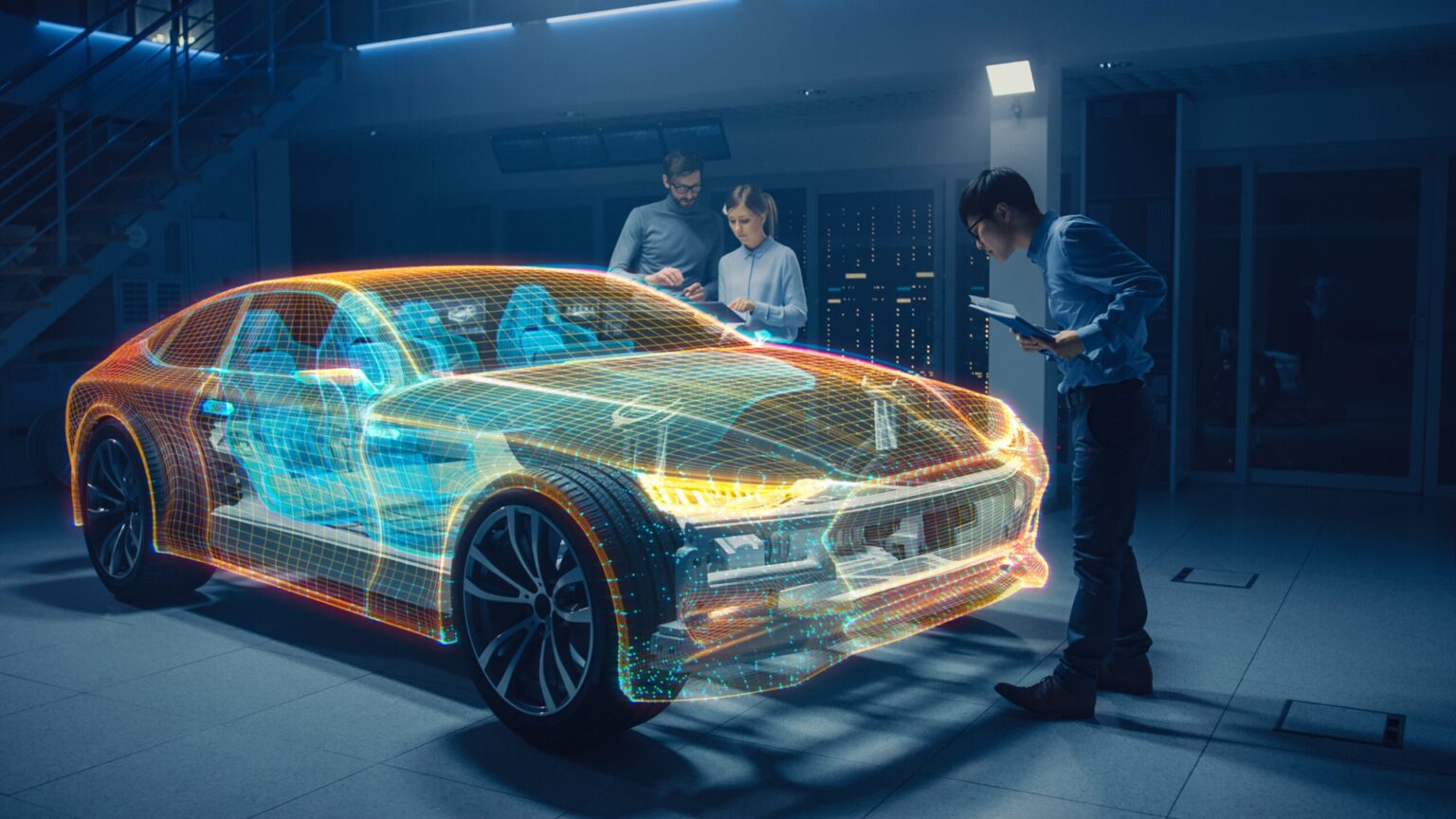
The automobile is going through one of the most important transformations in its history. Cars are no longer simply machines built around an engine, gearbox, steering system, and brakes. They are becoming connected computers on wheels, powered increasingly by electricity and supported by artificial intelligence, advanced sensors, sophisticated software, and new energy systems.
The Future of Automotive Technology will not be defined by one invention. Instead, it will come from several technologies developing at the same time. Electric powertrains are becoming more capable, driver assistance systems are improving, software is taking greater control of vehicle functions, and charging infrastructure is becoming more important to everyday driving.
The scale of this change is already visible. The International Energy Agency reported that global electric car sales exceeded 17 million in 2024 and that electric vehicles accounted for more than 20 percent of the global car market. It also projected that global electric car sales could exceed 20 million in 2025.
For drivers, the Future of Automotive Technology means more than faster cars and larger screens. It could change how vehicles are purchased, maintained, charged, driven, updated, and even used.
Here are ten innovations that could have the greatest influence on the cars of tomorrow.
1. Artificial Intelligence Will Become the Brain of the Car
Artificial intelligence is moving beyond voice commands and basic infotainment. The next generation of AI systems could help vehicles understand their surroundings, predict driver needs, optimize energy consumption, and personalize the driving experience.
An AI-powered vehicle could learn patterns such as preferred cabin temperature, frequently used destinations, charging habits, and preferred driving settings. Instead of forcing drivers to operate dozens of menus, the vehicle could increasingly understand natural language and context.
AI is also becoming important in vehicle perception and automated driving. Cameras, radar, lidar, GPS information, mapping data, and other sensors can produce enormous amounts of information. AI can help interpret that information and identify vehicles, pedestrians, road markings, traffic signs, and potential hazards.
This is one reason artificial intelligence is likely to become a central part of the Future of Automotive Technology. However, expectations should remain realistic. AI-assisted driving does not automatically mean a completely autonomous car.
The US National Highway Traffic Safety Administration currently explains that Level 2 systems still require the driver to remain engaged and attentive. Higher automation levels remain a developing technology rather than something widely available for consumer purchase.
2. Software-Defined Vehicles Will Change What a Car Can Do
For decades, upgrading a car generally meant replacing physical components. The software-defined vehicle is changing that approach.
A software-defined vehicle uses software to control an increasing portion of the vehicle’s functions. This can allow manufacturers to introduce improvements through over-the-air updates instead of requiring a customer to visit a dealership for every software enhancement.
The International Energy Agency describes the rise of software-defined vehicles as one of the major developments in modern automotive engineering. It notes that software is becoming increasingly important in vehicle functionality and that some manufacturers are treating vehicles more like continuously updateable digital platforms.
The practical advantage for owners could be significant. A vehicle might receive improvements to its navigation system, charging management, infotainment, driver assistance functions, or energy efficiency after the car has already been delivered.
This also creates a new ownership question. If software controls more vehicle functions, cybersecurity and long-term software support become just as important as mechanical reliability. That makes software development a fundamental part of the Future of Automotive Technology, rather than simply an entertainment feature.
3. Solid State Batteries Could Transform Electric Cars
Battery technology remains one of the most important areas of automotive research. Current lithium-ion batteries have improved dramatically, but manufacturers continue to search for ways to increase energy density, reduce weight, improve charging performance, lower costs, and enhance safety.
Solid-state batteries are one of the technologies attracting considerable attention. Instead of using a conventional liquid electrolyte, solid-state designs use a solid material. The technology has the potential to provide improvements in energy density and packaging, although large-scale production and long-term durability remain important challenges.
If manufacturers overcome those challenges, solid-state batteries could make electric vehicles lighter, more efficient, and capable of longer driving ranges.
For ordinary drivers, the biggest benefit may not simply be a larger range number. A lighter battery could improve efficiency and handling, while faster charging could make long-distance electric travel more convenient.
The Future of Automotive Technology will therefore depend heavily on battery research because the battery influences vehicle price, weight, range, performance, and charging time.
4. Ultra-Fast Charging Will Make EV Ownership More Convenient
Battery capacity is only one part of the electric vehicle equation. Charging speed matters just as much for drivers who regularly travel long distances.
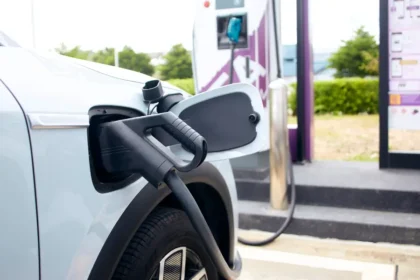
Charging technology is improving through higher-power charging equipment, improved battery chemistry, better thermal management, and more sophisticated charging software.
The ideal future is not necessarily a car with an enormous battery. A more efficient vehicle with a reasonably sized battery that can recharge quickly could be more practical and less expensive.
Charging networks will also become increasingly important. Drivers need reliable stations, predictable charging speeds, easy payment systems, and accurate information about charger availability.
This is especially important in countries where home charging is difficult or where long-distance charging infrastructure is still developing.
As the Future of Automotive Technology progresses, charging will increasingly become part of the overall vehicle experience rather than something drivers consider separately from the car.
5. Vehicle-to-Grid Technology Could Turn Cars Into Energy Assets
Electric vehicles can potentially do more than consume electricity.
Vehicle-to-grid technology allows compatible electric vehicles to send electricity back to the electrical grid under suitable conditions. Related systems can also allow vehicles to supply electricity to a home or another electrical load.
Imagine arriving home with an electric vehicle that has plenty of stored energy. Instead of immediately drawing electricity from the grid during an expensive period, the vehicle could potentially provide some electricity to the house.
At a larger scale, millions of electric vehicles could become distributed energy storage resources. There are still technical, regulatory, infrastructure, and battery degradation questions to solve. Not every vehicle will support bidirectional charging, and electricity markets differ from one region to another.
Nevertheless, the concept illustrates how the Future of Automotive Technology is connecting the automobile industry with the energy industry.
6. Advanced Driver Assistance Will Become More Capable
Many drivers already use technologies such as adaptive cruise control, automatic emergency braking, blind spot monitoring, and lane-keeping assistance.
The next generation of advanced driver assistance systems is expected to become better at understanding complex road situations and responding more smoothly.
Modern systems can combine cameras, radar, software, mapping information, and other sensors. Their goal is not simply to make driving easier but also to help prevent collisions.
The National Highway Traffic Safety Administration states that driver assistance technologies can warn drivers about dangerous situations and, in some cases, intervene to help avoid or reduce the severity of crashes.
However, drivers should understand the difference between assistance and automation. A system that can steer and maintain speed does not necessarily mean the vehicle can safely drive without supervision.
This distinction will remain important as the Future of Automotive Technology brings increasingly sophisticated driving assistance into mainstream vehicles.
7. Autonomous Driving Will Continue Its Long Development
Fully autonomous driving remains one of the most discussed subjects in the automotive industry. The basic idea is simple. A vehicle uses sensors and computing systems to understand its environment and perform the driving task without continuous human control.
The engineering challenge is far more complicated. A real road contains unpredictable pedestrians, motorcycles, animals, road construction, unusual weather, damaged lane markings, aggressive drivers, temporary signs, and countless situations that are difficult to reproduce in testing.
The National Highway Traffic Safety Administration defines different automation levels from Level 0 through Level 5. Level 3 involves conditional automation, while Level 4 is limited to specific operating conditions and areas. Level 5 represents full automation under all conditions.
NHTSA currently states that Level 3 through Level 5 automated driving technologies are not widely available for consumer purchase today. That means headlines about self-driving technology should be viewed carefully.
Autonomous driving is still an important part of the Future of Automotive Technology, but its development will depend on safety validation, regulation, infrastructure, public acceptance, and real-world performance.
8. Vehicle Connectivity Will Connect Cars
Connected cars are becoming increasingly useful because vehicles can communicate with cloud services, smartphones, navigation systems, charging networks, and potentially other vehicles and infrastructure.
A connected vehicle can receive traffic information, update navigation routes, locate charging stations, report maintenance information, and provide remote functions through a smartphone.
The next stage could involve greater communication between vehicles and infrastructure. A vehicle might receive information about traffic lights, road hazards, approaching emergency vehicles, congestion, or changing road conditions.
This could improve safety and efficiency if implemented correctly.
Connectivity also introduces privacy and cybersecurity concerns. The more connected a vehicle becomes, the more important it is for manufacturers to protect vehicle systems and customer data.
For this reason, cybersecurity will become an essential part of the Future of Automotive Technology, not an optional feature.
9. Advanced Vehicle Sensors Will Improve Safety and Automation
Sensors are the eyes and ears of modern vehicles. Cameras can identify lane markings and objects. Radar can measure distance and relative movement. Lidar can create detailed information about the surrounding environment. Ultrasonic sensors can help with close-range detection.
Future vehicles may combine these technologies more intelligently rather than depending on a single type of sensor. Sensor technology can also improve features that drivers use every day. Parking assistance, pedestrian detection, blind spot monitoring, emergency braking, and highway assistance can all benefit from better environmental awareness.
The challenge is making these systems reliable in rain, fog, darkness, glare, dust, snow, and other difficult conditions. The Future of Automotive Technology will therefore depend not only on adding more sensors but also on improving the quality of the information they provide and the software that interprets it.
10. Augmented Reality Displays Could Change the Driving Interface
The traditional dashboard is also changing. Instead of looking down at a conventional instrument cluster or center screen, drivers may increasingly receive important information through augmented reality displays.
An augmented reality head-up display could project navigation instructions onto the road ahead from the driver’s perspective. It could highlight a turn, display a warning, or show information about a detected hazard.
The biggest advantage is potentially reducing the need to look away from the road. However, designers must be careful. Too much information can distract rather than help. The best future interfaces will likely display only the information that matters at the right moment. This is another area where AI could make a difference by deciding what information deserves the driver’s attention.
How These Technologies Will Work Together
The most interesting part of the Future of Automotive Technology is not any individual invention. It is the way these technologies can work together.
Consider a future electric vehicle equipped with a high-density battery, fast charging, advanced sensors, artificial intelligence, connected services, and software-defined architecture.
The battery could provide efficient electric propulsion. AI could optimize energy consumption. Navigation software could automatically plan charging stops. Connected services could provide real-time charger information. Advanced driver assistance could help during highway travel. Over-the-air updates could improve the vehicle after purchase.
The result would be a vehicle that feels less like a traditional machine and more like an evolving technological platform. That does not mean mechanical engineering will become irrelevant. Tires, brakes, suspension, steering, thermal management, crash structures, and manufacturing quality will remain essential. Technology will become more deeply integrated into every part of the vehicle.
What This Means for Car Buyers
The Future of Automotive Technology also changes how people should evaluate a new vehicle. Horsepower and fuel economy will remain important, but buyers may increasingly need to consider software support, battery warranty, charging capability, driver assistance performance, cybersecurity, connectivity, and update policies.
When considering an electric vehicle, look beyond the advertised driving range. Check charging speed, charging compatibility, battery warranty, real-world efficiency, service availability, and the quality of the charging network where you live.
For vehicles with advanced driver assistance, understand exactly what the system can and cannot do. Read the owner’s manual and learn when the driver must remain attentive.
A long list of technology features does not automatically make one car better than another. Good technology should solve real problems without creating unnecessary complexity.
The Biggest Challenge Will Be Trust
Technology can make vehicles safer and more convenient, but consumers need to trust it. A driver must know when an assistance system is active, what it can see, what it cannot see, and when the driver needs to intervene.
Manufacturers also need to communicate clearly about system limitations. This is particularly important with automated driving. NHTSA emphasizes that current consumer driver assistance systems still require drivers to remain responsible and attentive.
Trust will not come from marketing claims. It will come from reliable performance, transparent information, strong safety testing, effective regulation, and millions of real-world driving experiences.
Will Future Cars Still Feel Like Cars
This is perhaps the most interesting question. As vehicles become increasingly automated and software-driven, the traditional experience of driving may change.
Some people will welcome cars that handle traffic, find parking spaces, manage charging, and reduce the stress of commuting. Others will continue to value steering feel, engine sound, mechanical feedback, and the sense of controlling the machine directly.
The industry will probably serve both groups. Performance cars and enthusiast vehicles can preserve the emotional side of driving, while everyday transportation becomes increasingly automated and efficient.
The Future of Automotive Technology does not necessarily mean the end of driving. It means drivers will have more choices about when technology should assist them and when they want to take control themselves.
The Road Ahead for Automotive Technology
The Future of Automotive Technology is already beginning to appear in today’s vehicles. Electric powertrains are becoming mainstream, software is becoming more important, advanced safety systems are increasingly common, and connected services are changing the relationship between drivers and manufacturers.
The next decade will likely bring faster progress, but not every promising technology will become commercially successful. Some battery concepts will fail to reach mass production. Some autonomous driving approaches will take longer than expected. Some connected features may prove unnecessary. Other technologies that currently seem experimental could eventually become standard equipment.
The winners will probably be the technologies that provide genuine value rather than simply adding complexity. From AI and software-defined vehicles to advanced batteries, charging systems, connected cars, sensors, and automated driving, the Future of Automotive Technology is moving the automobile into a new era.
For drivers, the most exciting part is that this transformation is not happening somewhere far in the future. It is already happening in the cars being designed, tested, manufactured, and driven today.
For WheelsWind readers, the Future of Automotive Technology is worth watching closely because the next generation of vehicles will not simply transport people from one place to another. They will increasingly think, communicate, learn, update, and interact with the energy and digital systems around them.
The real measure of progress, however, will remain simple. The best automotive technology should make transportation safer, cleaner, easier, more reliable, and more enjoyable for ordinary people.
Editor Choice
The most important innovation to watch is the combination of electric power, artificial intelligence, and software-defined vehicle architecture. Each technology is useful by itself, but their combination could fundamentally change how cars are built and how owners use them.