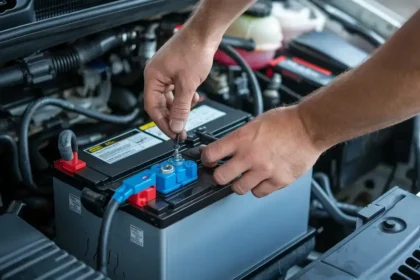

Learning how to test car battery health at home can save you from an unexpected no-start, a tow, or an unnecessary replacement. A simple multimeter, a clean battery, and a few careful readings can tell you whether the battery is charged, undercharging, failing to hold charge, or whether the fault may actually sit in the alternator or starter circuit.
I have tested enough batteries in driveways and parking lots to know one thing clearly: voltage alone does not tell the whole story. A battery can show a respectable resting reading and still collapse when the starter demands a large burst of current. That is why proper car battery testing combines a resting voltage check, a cranking voltage check, and, when possible, a load or conductance test.
Why Car Battery Testing Matters
A car battery does more than start the engine. It stabilizes electrical power, supports the ignition and fuel systems during startup, and supplies accessories when the engine is off. When it weakens, you may notice slow cranking, dim lights, warning messages, or electrical glitches that seem unrelated.
Regular car battery testing is especially useful before winter, before a long trip, or after the vehicle has been parked for several days. Heat, short trips, corrosion, high electrical demand, and age all reduce battery capacity over time. Testing early gives you time to recharge, clean connections, or replace the battery on your own schedule rather than waiting for a breakdown.
What You Need to Test a Car Battery
For a basic car battery voltage test, you need:
- A digital multimeter capable of reading DC voltage
- Safety glasses and gloves
- A wire brush or battery terminal cleaner
- A battery charger if the battery is low
- Optional: a dedicated battery load tester or smart battery tester
A multimeter is inexpensive and useful for far more than batteries. A dedicated battery tester is better if you want a more complete assessment, because it can estimate cold cranking amps, internal resistance, and overall battery condition rather than voltage alone.
Prepare the Battery Before Testing
Before you test car battery voltage, park on level ground, switch off the ignition, and turn off headlights, interior lights, climate control, chargers, phone accessories, and any other electrical loads. Open the hood and inspect the battery.
Look for a swollen case, cracks, leaking fluid, heavy corrosion, loose terminals, or a damaged hold-down bracket. If you see leaking acid or a badly swollen battery, do not continue testing it yourself. Replace it safely or have a professional handle it.
Clean the terminals if they are coated with white, green, or bluish corrosion. Dirty terminals can create a false low reading even when the battery itself is healthy. Wear eye protection, avoid letting metal tools bridge both terminals, and keep the battery upright.
How to Test Car Battery With a Multimeter
The easiest way to test car battery condition at home is with a multimeter. This car battery voltage test measures the electrical potential at the terminals and gives a useful first indication of charge level.
- Set the multimeter to DC voltage. If it is not auto-ranging, select the 20V DC range.
- Connect the red probe to the positive terminal, usually marked with a plus symbol.
- Connect the black probe to the negative terminal, usually marked with a minus symbol.
- Read the display with the engine off and all accessories switched off.
- Record the number, then repeat the test after the car has rested for several hours or overnight.
For the most accurate result, test the battery after it has rested. Driving, charging, or using electrical accessories can leave a surface charge that makes the reading look better than reality. If you have just driven the car, switch on the headlights for about 15 seconds, switch them off, wait a minute, then take the reading.
Car Battery Voltage Chart
A typical healthy 12-volt lead-acid battery should read close to 12.6 volts after resting. These figures are practical guidelines, though AGM batteries may rest slightly higher when fully charged.
| Resting voltage | What it usually means |
|---|---|
| 12.6 to 12.8 volts | Fully charged and generally healthy |
| 12.4 to 12.5 volts | About 75 percent charged |
| 12.2 to 12.3 volts | About 50 percent charged |
| 12.0 to 12.1 volts | Low charge, recharge soon |
| Below 12.0 volts | Deeply discharged or possibly damaged |
A low reading does not automatically mean the battery is bad. It may be discharged. Charge it fully, let it rest, and test it again. If it will not return to a healthy resting voltage, or if it drops quickly after charging, the battery may no longer hold charge properly.
How to Check Car Battery Health Under Load
Resting voltage shows state of charge, but not true health. To check how the battery performs when the starter motor pulls heavy current, keep the multimeter connected and ask someone to start the engine while you watch the display.
During cranking, a healthy fully charged battery should generally stay above about 9.6 volts. If the voltage plunges far below that, the battery may have high internal resistance, damaged plates, sulfation, or insufficient cranking capacity. Poor cable connections or a failing starter can also cause a large voltage drop, so clean and tight terminals matter.
This is not a laboratory-grade load test. A proper load tester applies a controlled load, often based on the battery’s cold cranking amp rating, for a set period. Still, the cranking voltage test is a valuable home check because it reflects real starting conditions.
Test the Charging System Too
If the battery passes the resting and cranking checks but keeps going flat, the charging system may be the issue. Start the engine and measure the voltage again at the battery terminals.
With the engine running, a healthy charging system commonly produces roughly 13.5 to 14.7 volts, depending on the vehicle, temperature, and electrical load. If the reading stays near 12.5 volts or lower while running, the alternator, voltage regulator, wiring, or drive belt may not be charging the battery correctly.
Do not assume a dead battery means a bad battery. A weak alternator can drain a perfectly good battery by failing to recharge it during driving. Likewise, a faulty battery can overload the alternator and create symptoms that look like a charging fault. Testing both helps you avoid replacing the wrong part.
Signs of a Weak Car Battery
Watch for these common signs of a weak car battery:
- Slow or labored engine cranking
- Clicking sound when you turn the key
- Dim headlights, especially at idle
- Electrical accessories behaving unpredictably
- Battery warning light on the dashboard
- Need for frequent jump starts
- Battery that dies after a few days of parking
- Swollen battery case or corrosion around terminals
Cold weather often exposes a marginal battery because chemical reactions slow down and engine oil becomes thicker. A battery that starts the car easily in warm weather may struggle on the first cold morning. That is why testing before the season changes is a smart habit.
When to Replace the Battery
Replace the battery if it fails to hold a full charge after proper charging, repeatedly drops below a healthy resting voltage, fails a load test, shows physical damage, or is more than three to five years old and causing starting problems. Battery lifespan varies widely with climate, driving habits, vehicle electrical load, and battery quality.
Before you change car battery components, confirm the replacement matches the vehicle’s group size, terminal layout, polarity, and cold cranking amp requirement. Many modern vehicles also need power maintained while the battery is disconnected to preserve settings, security systems, and adaptation data. Check the owner’s manual or use a memory saver if required.
How to Change Car Battery Safely
If testing confirms replacement is needed, follow a careful sequence for how to change car battery:
- Park safely, switch off the ignition, and remove the key.
- Wear gloves and eye protection.
- Disconnect the negative terminal first.
- Disconnect the positive terminal second.
- Remove the battery hold-down clamp.
- Lift the battery out upright, keeping acid away from skin and clothing.
- Clean the tray and terminal clamps.
- Install the new battery with correct polarity.
- Connect the positive terminal first, then the negative terminal.
- Tighten the hold-down bracket and test the vehicle.
Never allow the wrench to touch both terminals at once. Dispose of the old battery through an authorized recycling center, parts retailer, or service facility. Automotive batteries contain lead and acid and should never go into household waste.
Best Car Battery Recommendations
The best battery depends on your vehicle, climate, and electrical demands. For standard daily drivers, a high-quality flooded lead-acid battery from a reputable manufacturer is usually sufficient. For vehicles with start-stop systems, choose an AGM battery designed for frequent cycling and higher electrical demand.
Look for these features when comparing options:
- Correct group size and terminal orientation
- Adequate cold cranking amps for your climate
- Sufficient reserve capacity for accessories and idle use
- AGM construction for start-stop vehicles or heavy accessory loads
- A clear warranty with free replacement coverage
- Fresh manufacture date, ideally only a few months old
Do not buy purely on price. A cheap battery with low reserve capacity may cost more in inconvenience than the money saved. For most drivers, buying a recognized brand with the correct specification and a solid warranty is more valuable than chasing the lowest sticker price.
Common Battery Testing Mistakes
One common mistake is testing immediately after driving. Surface charge can make a tired battery appear healthy. Another is judging a battery solely by resting voltage. Voltage indicates charge level, while load performance reveals whether the battery can actually deliver starting power.
People also overlook terminal corrosion and loose clamps. A battery may be perfectly fine, but a poor connection at the post can mimic every symptom of failure. Finally, do not ignore repeated low readings after charging. That pattern usually points to a battery that can no longer hold capacity reliably.
Frequently Asked Questions
How often should I test my car battery?
Test it at least twice a year, ideally before summer and winter. Test more often if the vehicle sits unused, has frequent short trips, or has shown slow starting.
Can I test a car battery without a multimeter?
Yes, but less precisely. You can watch headlight brightness during cranking, listen for slow cranking, or use a battery tester at an auto parts store. A multimeter remains the best simple home tool.
What voltage is a dead car battery?
A rested 12-volt battery reading below about 12.0 volts is deeply discharged. Below roughly 11.8 volts, it may be effectively flat and needs immediate charging.
Can a battery read 12.6 volts and still be bad?
Yes. A battery can hold enough surface voltage to read well but lack the capacity to deliver high current during starting. A cranking test, load test, or conductance test gives a better health assessment.
Is 12.4 volts bad for a car battery?
It is not necessarily bad, but it is only about 75 percent charged. Recharge the battery, let it rest, and test again before deciding whether it needs replacement.
How long does a car battery last?
Many batteries last three to five years, but extreme heat, frequent short trips, high accessory loads, and long periods of inactivity can shorten that life.
My Opinion
Testing a car battery at home is straightforward once you understand what each reading means. Use resting voltage to assess charge, cranking voltage to assess starting strength, and charging voltage to rule out alternator problems. When the numbers and symptoms agree, you can make a confident decision instead of guessing.