How to change car battery is one of the few maintenance jobs most drivers can safely handle at home. If your battery is easily accessible, you have the right tools, and you follow the correct terminal order, changing a car battery usually takes less than 30 minutes and can save you the labor charge of a battery mechanic.
I have replaced batteries on everything from small hatchbacks to SUVs, and the biggest mistake is not the physical swap. It is rushing the preparation, using the wrong battery specification, or reconnecting the terminals in the wrong order.
When You Can Do It Yourself
A DIY car battery replacement is realistic when the battery sits under the hood in an open tray, and the terminals are accessible. Most conventional petrol, diesel, and hybrid vehicles use a 12 volt battery that can be replaced with basic hand tools.
You should call a professional instead if the battery is under a seat, behind interior trim, in the trunk with multiple covers, or if your vehicle requires battery registration after installation. Some modern vehicles use battery management systems that must be told a new battery has been fitted; skipping this step can affect charging performance and shorten battery life.
Signs Your Battery Needs Replacement
A battery rarely fails without warning. Common signs include slow cranking, dim headlights at idle, a battery warning light, corrosion around the terminals, or a car that starts fine one day and refuses to start the next.
Before buying a new battery, test the old one if possible. A weak alternator, loose belt, parasitic drain, or corroded cable can mimic battery failure. Replacing car batteries without diagnosing the charging system can leave you stranded again within weeks.
Tools and Safety Gear
Keep these items ready before you begin:
- New battery matching your vehicle’s group size, cold cranking amps, terminal layout, and battery type
- Adjustable wrench or socket set
- Battery terminal brush or wire brush
- Work gloves and safety glasses
- Rag and baking soda mixed with water for corrosion cleanup
- Battery terminal protectant or petroleum jelly
- Memory saver, optional but useful for preserving radio presets and electronic settings
Wear eye protection because batteries can release acidic mist and flammable hydrogen gas. Avoid smoking, open flames, and sparks near the battery, and never allow a metal tool to bridge both terminals. Safety guidance from AAA and the Texas Department of Insurance specifically recommends gloves, goggles, insulated tools, and disconnecting the negative terminal first.
Choose the Right Replacement Battery
Do not buy a battery only because it physically fits. Check the label on the old battery or consult your owner’s manual for the correct group size, terminal position, and power rating.
Standard flooded batteries suit many older or basic vehicles. AGM batteries are common in vehicles with start-stop systems, high electrical loads, or premium electronics. Using the wrong type can cause poor performance, early failure, or charging system issues.
Car battery replacement cost varies widely by battery chemistry and vehicle type. A standard replacement battery often costs roughly $90 to $200, while AGM and premium batteries can run from about $150 to $400 or more. Professional installation can add labor charges, and dealer fitting may cost more, especially when coding or registration is required.[
Prepare the Vehicle
Park on level ground, engage the parking brake, remove the key, and switch off the engine. Turn off headlights, interior lights, climate control, infotainment, and any accessories that draw power.
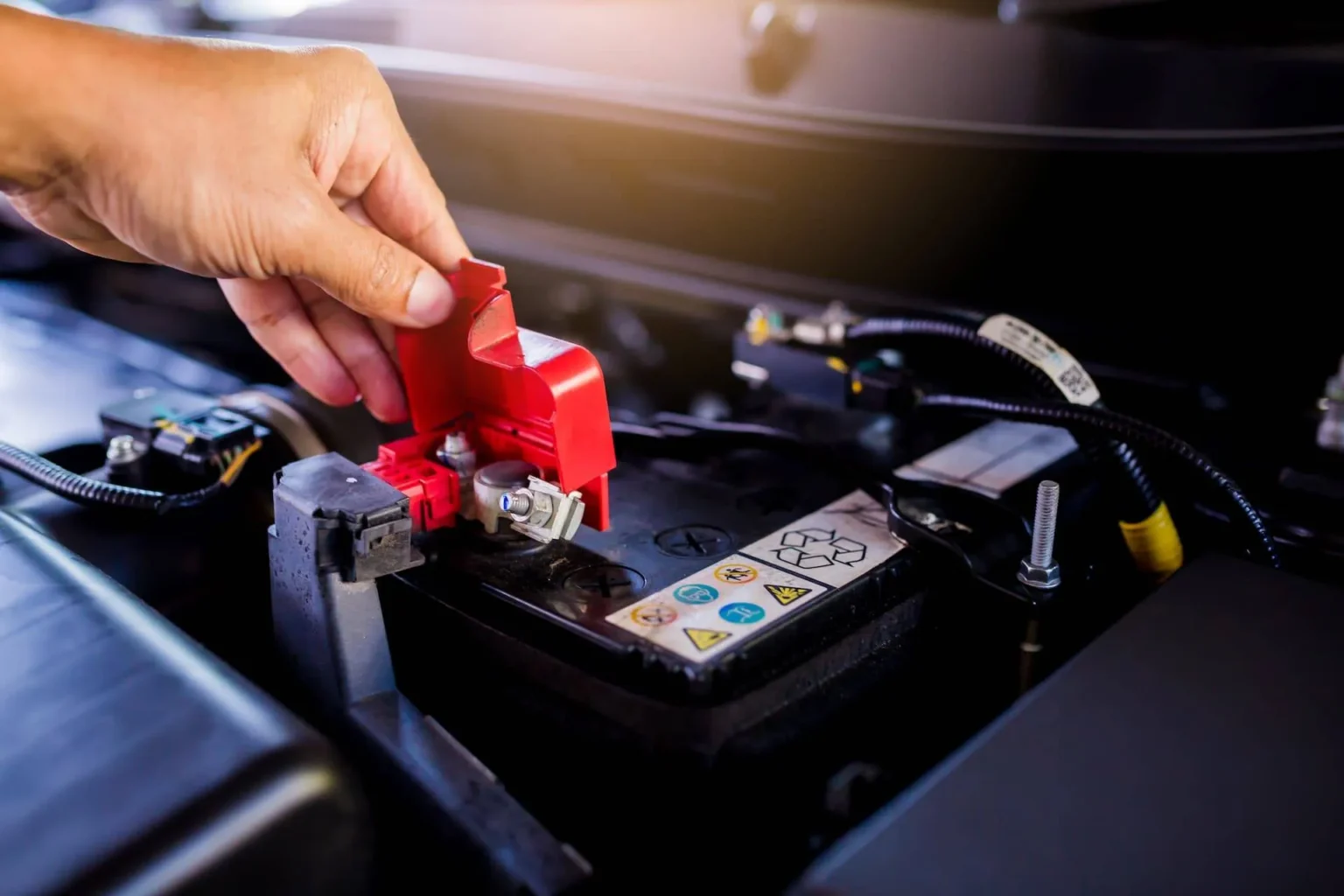
Let the engine bay cool if you have recently driven. Open the hood and locate the battery. Identify the positive terminal, usually marked with a plus sign and red cover, and the negative terminal, usually marked with a minus sign and black cover.
If you are using a memory saver, connect it before disconnecting the battery. This helps preserve settings, though it is not essential for every vehicle.
Disconnect the Old Battery
Always disconnect the negative terminal first. Loosen the nut on the black negative cable, wiggle the clamp free, and move it away from the battery so it cannot spring back into contact. This order reduces the risk of a short circuit if your wrench touches grounded metal.
Next, loosen and remove the positive terminal. Keep the positive cable away from any metal surface. Then remove the battery hold down clamp or bracket. Batteries can weigh roughly 40 to 60 pounds, so lift with your legs and keep the unit upright.
Inspect the tray and cables while the battery is out. Clean white, green, or blue corrosion from the terminals using a terminal brush and a baking soda solution. Damaged cables, cracked clamps, or a rusted hold-down bracket should be repaired before installing the new battery.
Install the New Battery
Place the new battery in the tray with the terminals oriented exactly like the old one. Secure it firmly with the hold-down bracket. A loose battery can move while driving, damage cables, or create a dangerous short circuit.
Reconnect the terminals in reverse order: positive first, then negative. Tighten both clamps snugly, but do not overtighten them because excessive force can crack the battery post. Apply a thin layer of terminal protectant to reduce future corrosion.
Start the vehicle and check that the battery warning light turns off. Test the headlights, horn, central locking, infotainment, and climate controls. If everything works normally, close the hood and take a short drive.
Should You Use a Car Battery Charger?
A car battery charger is useful when the old battery is discharged rather than damaged. If your battery is less than three or four years old and the vehicle cranks slowly after a period of non use, charging may restore it.
Use a smart charger with automatic shutoff, connect positive to positive and negative to negative, and charge in a ventilated area. Never attempt to charge or jump-start a frozen battery, because it can be unsafe. If the battery repeatedly loses charge after a full recharge, replacement is usually the better option.
How to Avoid Needing a Battery Mechanic
You can extend battery life with a few simple habits. Avoid leaving lights or accessories on when the engine is off, take the car for longer drives occasionally, and keep terminals clean. In extreme heat or cold, have the charging system tested before winter or summer peaks.
If you use a car battery charger regularly, choose one with a maintenance or float mode. This prevents overcharging when the vehicle sits unused for weeks.
When a Battery Mechanic Is Worth It
A battery mechanic is worth the cost when the battery is difficult to access, the vehicle needs coding, or you suspect an electrical fault. Professional service also includes proper disposal of the old battery, which matters because lead-acid batteries should not go into household waste.
For a straightforward under-hood replacement, however, doing it yourself is practical, safe, and satisfying. Once you understand how to change car battery components correctly, the task becomes routine maintenance rather than an emergency repair.
Frequently Asked Questions
How long does it take to change a car battery?
For an accessible under-hood battery, expect 20 to 40 minutes. Vehicles with battery covers, trunk mounting, or electronic registration requirements can take longer.
Can I change a car battery while the engine is running?
No. Turn off the engine and remove the key first. Working on a live electrical system increases the risk of sparks, shorts, and damage to vehicle electronics.
Which terminal do I disconnect first?
Disconnect the negative terminal first. When installing the new battery, connect the positive terminal first and the negative terminal last.
What is the average car battery replacement cost?
The battery itself commonly costs about $90 to $200 for standard types, while AGM or premium batteries can cost $150 to $400 or more. Installation, disposal, and battery coding can increase the total.
Do I need to reset anything after changing the battery?
You may need to reset the clock, radio presets, window auto up and down function, or trip computer. Some vehicles also require battery registration, so check the owner’s manual.
Can I drive immediately after replacing the battery?
Yes, provided the terminals are tight, the battery is secured, and the engine starts normally. A short drive helps confirm that the charging system is working.