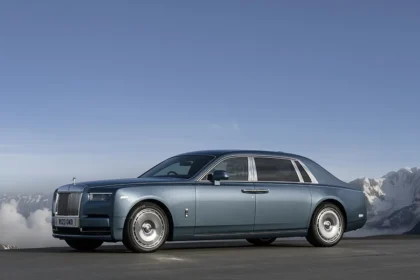
The automotive world has officially entered a new era, and the 2026 Mercedes-AMG GT 4-Door Coupe stands right at the center of it. What was once a thunderous V8-powered grand tourer has now transformed into an all-electric hyper-sedan that feels ripped straight out of the future. Yet somehow, despite losing its combustion engine, this machine still carries the soul, aggression, and theater that enthusiasts expect from AMG.
Officially revealed on May 20, 2026, the new generation is not just a facelift or mild evolution. This is a complete reinvention built on Mercedes’ all-new AMG.EA 800-volt electric platform. Every detail, from its insane power delivery to its advanced suspension system, screams ambition. And honestly, the numbers attached to this car are difficult to comprehend. For fans of fast sedans, futuristic engineering, and emotional performance machines, this could be one of the most important vehicle launches of the decade.
A Completely New Direction for AMG
The biggest talking point surrounding the new Mercedes-AMG GT is obvious. The V8 is gone. That statement alone will shock traditional AMG fans. For years, AMG vehicles were celebrated for their handcrafted engines and brutal exhaust notes. But instead of trying to recreate the past, Mercedes decided to leap aggressively into the future.
The new GT 4-Door Coupe is fully electric and introduces technology that most performance brands are still years away from mastering. It rides on the dedicated AMG.EA architecture designed specifically for high-performance EVs rather than adapting an existing combustion platform. This decision allowed engineers to rethink everything about the car. Weight distribution, aerodynamics, cabin packaging, battery cooling, and suspension geometry were all redesigned from scratch. The result is a machine that feels more like an electric supercar disguised as a practical sedan.
Axial-Flux Motors Change Everything
One of the biggest breakthroughs in the 2026 model is its use of axial-flux motors. Unlike traditional electric motors used in most EVs, these are significantly smaller, lighter, and more energy-dense. That engineering leap gives the car truly absurd levels of performance.
The flagship Mercedes-AMG GT 63 4-Door uses a tri-motor setup with two motors mounted at the rear and one at the front. Combined output reaches a mind-bending 1,169 horsepower alongside 1,475 lb-ft of torque. That is hypercar territory. Acceleration figures sound almost fictional. The GT 63 launches from 0 to 100 km/h in only 2.1 seconds, making it one of the quickest production sedans ever created.
Even the “smaller” GT 55 variant feels outrageous. It produces 816 horsepower and 1,801 Nm of torque, which would have made it the king of performance sedans just a few years ago. The scary part is how instantly electric torque arrives. There is no waiting, no hesitation, and no gear hunting. The car simply explodes forward the moment you touch the throttle.
The Fake V8 Sound That Might Fool Enthusiasts
One concern many enthusiasts had about electric AMG models was emotional engagement. EVs are brutally fast, but they often lack drama. To preserve the emotional identity of the car, engineers created a patent-pending acoustic system using 1,600 audio samples to simulate a realistic AMG V8 roar. In aggressive driving modes, the system even adds haptic feedback and artificial “gear-shift” interruptions to mimic the sensation of a combustion-powered performance car.
A digital rev counter completes the illusion. Some purists will still reject the idea entirely, but there is no denying the effort Mercedes invested to keep the experience exciting. This is not simply fake speaker noise. It is a carefully engineered sensory experience designed to keep the driver emotionally connected.
Battery Technology Inspired by Formula 1
It uses a massive 106 kWh pack filled with direct oil-cooled cylindrical cells derived from Formula 1 technology. Cooling is one of the biggest challenges in high-performance EVs, especially during repeated hard acceleration or track driving. Mercedes claims this advanced cooling setup allows the car to sustain performance consistently rather than reducing power after a few laps. Range figures are surprisingly strong considering the car’s performance.
The GT 55 delivers a WLTP-rated range of 700 kilometers, while the more powerful GT 63 still manages an impressive 696 kilometers.
Charging Speeds That Feel Unreal
The 800-volt architecture supports up to 600 kW DC fast charging, which is currently among the fastest charging capabilities in the automotive industry.
Under ideal conditions, the car can charge from 10% to 80% in just 11 minutes. Even crazier, Mercedes claims drivers can add roughly 460 kilometers of range in only 10 minutes. Those numbers completely change how people think about electric performance cars. Long-distance road trips suddenly become realistic without lengthy charging stops ruining the experience.
Hiding 2.46 Tonnes with Smart Engineering
Despite its astonishing performance, the new GT 4-Door Coupe still weighs around 2.46 tonnes because of its massive battery pack. Normally, that much weight would ruin agility. AMG engineers attacked the problem using advanced chassis technology. The car uses AMG Active Ride Control with hydraulically interconnected dampers instead of traditional anti-roll bars. This setup helps keep the body flat during aggressive cornering while maintaining comfort during normal driving.
Rear-wheel steering adds another layer of agility, allowing the rear wheels to turn up to six degrees. At low speeds, the car feels more compact and maneuverable. At high speeds, stability improves dramatically. Perhaps the most impressive achievement is the driving position and stance. Designers managed to lower the vehicle by 4 centimeters compared to the previous generation despite the battery being mounted in the floor.
The Exterior Looks Like the Future
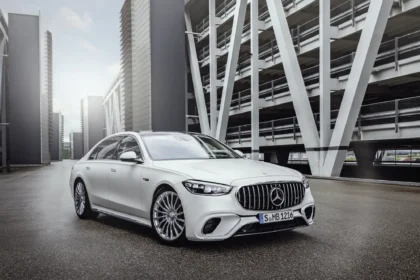
Visually, the 2026 model still carries the elegant proportions that made the original car attractive, but now everything feels sharper and more futuristic. The front end features a lower concave grille with vertical slats, illuminated Mercedes branding, and extremely clean surfacing. Aerodynamics played a huge role in shaping the body, helping the car achieve a remarkably slippery drag coefficient of just 0.22. From the side, the sweeping roofline still gives it coupe-like elegance despite the practical four-door layout.
This balance between aggression and sophistication is what separates premium German performance cars from many rivals. The design does not scream for attention, but it radiates power.
A High-Tech Cabin with Real Practicality
Inside, the cabin feels more like a futuristic concept car than a traditional sedan. The dashboard is dominated by a massive triple-screen layout stretching across the interior. Digital displays, performance data, and entertainment systems create an ultra-modern environment without losing the premium AMG feel. Rear passengers were not ignored either. Engineers designed sculpted foot garages directly into the battery tray, allowing adults to sit lower and enjoy proper legroom despite the coupe roofline. Practicality remains surprisingly strong for a high-performance EV.
The rear boot offers 507 liters of cargo space, while the front trunk adds another 62 liters. That means owners can comfortably use this car for long road trips without sacrificing luggage capacity. For buyers searching for luxury cars that can genuinely handle both excitement and daily life, this balance matters enormously.
Where Performance Cars Go Next
The 2026 Mercedes-AMG GT 4-Door Coupe is not simply another electric sedan. It feels like a statement about where performance cars are heading next. It delivers hypercar acceleration, cutting-edge charging technology, advanced chassis systems, futuristic styling, and enough range to function as a real grand tourer. Most importantly, AMG worked hard to preserve emotional engagement rather than creating a cold appliance on wheels.