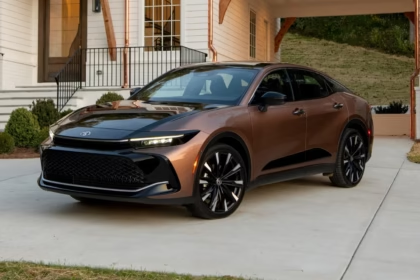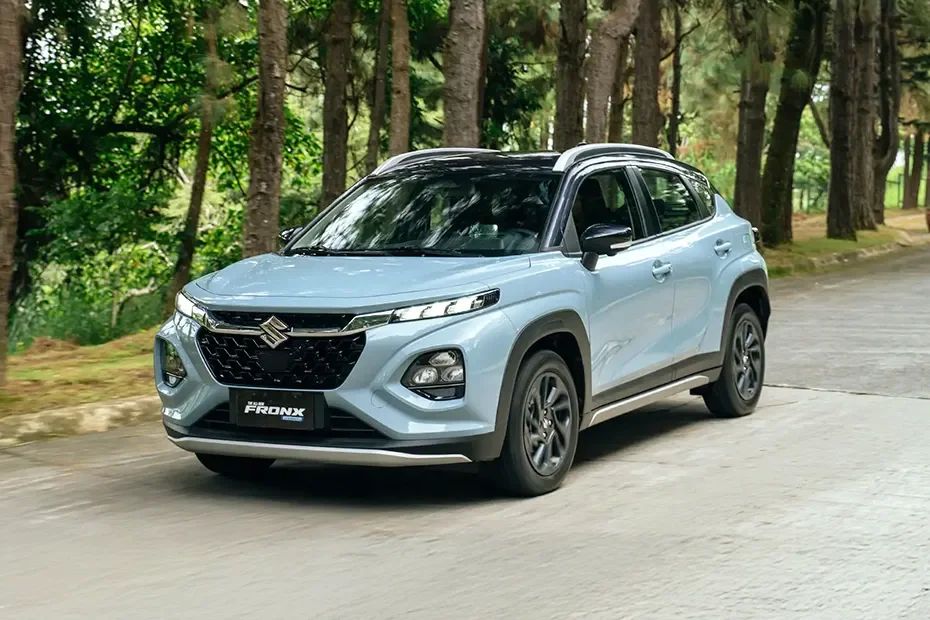
At first glance, the crossover certainly leaves a strong impression. It carries a sporty design, modern lighting elements, and a premium stance that immediately separates it from traditional hatchbacks. The aggressive front fascia and coupe-inspired rear styling give it a much more upscale appearance than many entry-level compact SUVs. But beneath that stylish body lies a lightweight engineering philosophy that creates mixed opinions among buyers.
For Pakistani customers especially, built quality matters more than ever. Roads in cities like Karachi are unpredictable, highways demand stability at high speeds, and buyers paying premium money expect confidence from their vehicles. The Fronx enters this market with strong visual appeal and hybrid efficiency, but its structural feel tells a more complicated story.
The Lightweight Philosophy Behind the Fronx
One of the biggest talking points surrounding the Suzuki Fronx Hybrid is its lightweight construction. The vehicle is built on Suzuki’s HEARTECT platform, a chassis architecture designed to reduce overall weight while improving fuel efficiency and agility.
This platform has become common across many modern Suzuki vehicles because it helps improve mileage and makes the car easier to maneuver in crowded urban conditions. The lighter body also contributes to better acceleration and a smoother driving character. In city traffic, the crossover feels responsive and effortless, which many drivers will appreciate. However, lightweight engineering comes with compromises. The steel used in the structure is thinner compared to heavier crossovers from some competitors. As a result, the doors and body panels can feel lighter than expected when opened or closed. Enthusiasts who are used to heavier European or Japanese SUVs may immediately notice the difference in solidity.
Exterior Build Quality Feels Modern but Light
Visually, the crossover looks fantastic. Suzuki has done an impressive job creating a bold design language that feels modern and urban. Sharp LED lights, muscular wheel arches, and the sloping rear profile give it a sporty identity that attracts younger buyers instantly.
The issue appears when people begin interacting with the vehicle physically. The doors shut with a lighter sound than many premium compact SUVs, and some body panels feel thinner when pressed by hand. While the paint finish and panel alignment appear decent overall, the vehicle does not deliver the tank-like confidence that some customers associate with durability.
Still, the overall fit and finish are acceptable for its segment. Panel gaps are mostly consistent, and the design itself hides some of the lightweight nature through clever styling. For many urban buyers, appearance alone may be enough to create satisfaction. In Pakistan, where road conditions vary dramatically from smooth highways to damaged city streets, people often equate weight with strength. This is where opinions around the Fronx become divided. Some buyers appreciate the lightweight handling and fuel savings, while others wish for a more substantial feel.
Cabin Quality Focuses More on Practicality
Step inside the cabin, and the vehicle immediately presents a modern atmosphere. The dashboard layout is clean, ergonomic, and user friendly. Higher trims with dual-tone themes create a more premium ambiance that improves the overall experience. The seats are designed well for daily comfort, and visibility is excellent from the driver’s seat. Suzuki clearly focused on practicality and ease of use rather than luxury. Controls are easy to reach, and the cabin layout feels sensible for urban driving. But material quality once again reminds you that this is fundamentally an entry-level compact crossover. Hard plastics dominate most surfaces, particularly around the doors and lower dashboard areas. While the textures look decent from a distance, they can scratch relatively easily during long-term ownership.
This does not necessarily ruin the experience because many cars in this segment use similar materials. However, buyers expecting soft-touch surfaces or premium craftsmanship throughout the cabin may feel slightly disappointed after spending time inside.
Suspension Setup Suits Pakistani Roads Perfectly
One area where the crossover genuinely impresses is ride comfort. Suzuki has tuned the suspension softly, and that decision works brilliantly on Pakistani roads. Cities like Lahore are filled with uneven surfaces, potholes, broken patches, and sudden speed breakers. A stiff suspension setup often creates cabin rattles and passenger discomfort in these conditions. The Fronx handles these situations surprisingly well.
The suspension absorbs rough surfaces smoothly and prevents harsh impacts from entering the cabin aggressively. Even over damaged roads, the vehicle maintains composure without excessive shaking. Compared to older Suzuki models like the Swift, the ride quality feels noticeably softer and more forgiving. This softer tuning gives the crossover an almost relaxed personality during city driving. Families and daily commuters will appreciate the comfort, especially during long hours in traffic.
Importantly, the cabin remains relatively rattle free over rough surfaces, which helps improve the perception of quality. Even though the body itself feels lightweight, the suspension tuning adds a sense of refinement that many buyers may not expect.
Highway Stability Reveals Some Limitations
At moderate speeds, the cabin remains calm enough for conversation and daily commuting. But once speeds rise above 100 km/h on motorways, road and tire noise become much more noticeable inside the cabin. Thin insulation material around the floor and wheel wells allows more external sound to enter than many premium rivals. This affects the overall sense of refinement during long-distance travel. Wind and road noise are not unbearable, but they remind occupants that the vehicle was engineered with cost efficiency and lightweight performance in mind.
The lighter body can also feel slightly less planted during strong crosswinds or high-speed lane changes. The vehicle remains safe and predictable overall, but drivers accustomed to heavier SUVs may notice the difference immediately.
For occasional motorway trips, the experience remains acceptable. But buyers who frequently travel long distances at high speeds might prefer something with stronger insulation and a more planted road presence.
Safety Ratings Remain a Concern
Safety discussions surrounding the Suzuki Fronx Hybrid are impossible to ignore. Vehicles built on similar HEARTECT platforms for emerging markets have historically achieved moderate to low Global NCAP or ANCAP ratings depending on equipment levels.
Modern safety features like airbags, ABS, and electronic aids improve occupant protection, but structural strength during severe crashes remains an area where some competitors perform better.
Mechanical Durability Appears Decent
Under the hood, the engineering layout is neat and organized. Suzuki has a strong reputation for mechanical simplicity and reliability, and the crossover continues that tradition. The hybrid system focuses more on efficiency than performance, which should help long-term durability. Components are arranged practically, making maintenance relatively straightforward for technicians familiar with Suzuki products.
The minimalist welding philosophy used on the HEARTECT frame once again reflects Suzuki’s obsession with reducing unnecessary weight. While this contributes positively to efficiency and agility, some enthusiasts interpret it as a compromise in structural robustness. Still, mechanical sturdiness overall appears decent for urban and family use. The crossover is unlikely to feel fragile during normal ownership, especially if maintained properly.
Does the Price Match the Build Quality
This is perhaps the biggest debate surrounding the crossover in Pakistan. Many buyers and online automotive communities believe the material quality and structural feel do not completely justify the premium pricing. The vehicle undoubtedly offers attractive styling, hybrid efficiency, smooth city comfort, and modern features. But when customers spend higher amounts, they often expect heavier doors, softer interior materials, better insulation, and stronger perceived durability. That perception gap creates divided opinions in the market. Some people see the crossover as an efficient modern urban SUV with smart engineering. Others feel the lightweight build reduces its premium appeal.
Ultimately, the answer depends on what the buyer values most. If fuel economy, comfort, maneuverability, and stylish design are priorities, the vehicle delivers strongly. But if someone prioritizes tank-like solidity and premium material richness above everything else, they may feel underwhelmed.
A Modern Urban Crossover With Clear Strengths and Weaknesses
The Suzuki Fronx Hybrid succeeds in areas that matter to modern city drivers. It looks stylish, feels easy to drive, offers comfortable suspension tuning, and brings hybrid efficiency into an attractive compact package. For daily commuting and urban family use, it delivers a refined and practical experience. At the same time, its lightweight construction becomes noticeable through the body panels, cabin materials, and highway insulation levels. The crossover does not completely hide its entry-level roots despite the premium styling and ambitious pricing.